Table of Contents
- Understanding Holistic Recovery for Sports Injuries
- Natural Therapies for Sports Injuries
- Nutrition for Tissue Repair and Inflammation Reduction
- Mental Strategies for Injury Recovery
- How Long Does It Take to Recover From a Sports Injury
- Building a Home-Based Holistic Recovery Routine
- Creating Your Integrated Recovery Plan
- Conclusion
Last Updated: August 5, 2026
Understanding Holistic Recovery for Sports Injuries
Holistic recovery for sports injuries is an integrated approach that treats the entire person, body, mind, and spirit, rather than isolating the injury itself. Unlike conventional medicine that often focuses on symptom suppression, holistic recovery addresses the underlying biomechanical, nutritional, and psychological factors that caused the injury or prevent full healing.
A twisted ankle isn’t just a ligament problem. It’s an opportunity to examine your movement patterns, assess nutritional deficiencies that slow tissue repair, evaluate stress levels that increase inflammation, and identify psychological barriers that keep you from returning to full athletic performance. The biopsychosocial model, which considers biological, psychological, and social factors in health, underpins modern sports medicine. Address only the tissue and the problem likely returns. Address all factors, and you create conditions for lasting healing.
Recovery timelines vary dramatically based on how comprehensively you approach rehabilitation. An athlete who combines soft tissue work, targeted therapeutic exercise, anti-inflammatory nutrition, stress management, and quality sleep typically heals faster and more completely than one who relies on rest alone.
Natural Therapies for Sports Injuries
Soft Tissue Mobilization and Myofascial Release
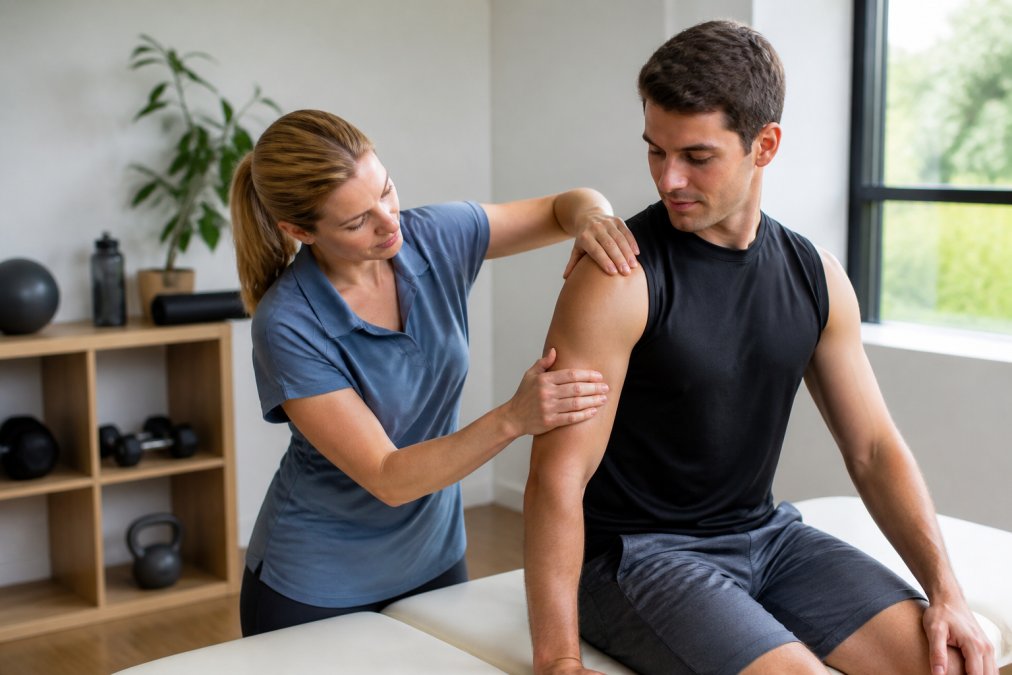
Soft tissue mobilization addresses restrictions in muscles, fascia, and connective tissue that develop after injury or from chronic movement patterns. When you sustain an injury, surrounding muscles tighten protectively. If this persists beyond the acute phase, it creates compensation patterns that slow recovery and increase re-injury risk. Soft tissue work breaks this cycle by releasing tension, improving blood flow to damaged tissue, and restoring normal movement mechanics.
Common techniques include deep tissue massage, trigger point therapy, instrument-assisted soft tissue mobilization, and self-myofascial release using foam rollers. The key is consistency. A single session provides temporary relief; weekly or twice-weekly sessions over several weeks create lasting changes. Most athletes notice improved range of motion within 3-4 sessions and significant pain reduction within 6-8 weeks when combined with other recovery modalities.
Acupuncture and Complementary Modalities
Acupuncture works through multiple mechanisms: stimulating nerve pathways that reduce pain signals, promoting blood flow to damaged tissue, triggering endorphin release, and modulating the autonomic nervous system to reduce stress-driven inflammation. For sports injuries, acupuncture is particularly effective for soft tissue injuries, chronic pain that persists after initial healing, and movement restrictions caused by scar tissue.
Complementary modalities like cupping and herbal medicine pair well with acupuncture, providing anti-inflammatory compounds that support healing. These aren’t replacements for physical therapy; they’re additions that optimize recovery conditions. Acute injuries often respond to twice-weekly sessions for 4-6 weeks. The goal is to reduce pain and inflammation enough that you can engage fully in therapeutic exercise, which ultimately rebuilds strength and stability.
Nutrition for Tissue Repair and Inflammation Reduction
Nutrition for tissue repair directly determines how quickly damaged muscle, ligament, and bone actually heal. Protein provides amino acids that rebuild tissue. Micronutrients like zinc, vitamin C, and copper are enzymatic cofactors required for collagen synthesis. Omega-3 fatty acids and polyphenols reduce excess inflammation that slows healing.
Protein intake should increase above your normal requirement. Aim for 1.2-1.6 grams per kilogram of body weight daily, distributed across meals rather than loaded at dinner, since your body uses roughly 20-30 grams per meal for optimal muscle protein synthesis.
Anti-inflammatory foods reduce the inflammatory cascade that can become excessive and prolonged. Fatty fish rich in omega-3s, colorful vegetables high in polyphenols, and spices like turmeric and ginger all provide compounds that modulate inflammation.
Micronutrient density matters more during recovery than at any other time. Zinc supports immune function and tissue repair. Vitamin C is required for collagen crosslinking. Iron supports oxygen transport to healing tissue. Magnesium reduces muscle tension and supports sleep quality. Focus on eating a truly diverse diet rather than supplementing randomly.
Hydration is critical but often overlooked. Dehydration impairs nutrient transport, reduces blood flow to tissues, and increases pain perception. Drink consistently throughout the day; pale urine is your target.
A common mistake is restricting calories during recovery. Undereating deprives your body of the energy and nutrients needed for tissue repair, actually extending recovery time. Eat well during injury recovery, then adjust calories once you return to full training.
Mental Strategies for Injury Recovery
Overcoming Kinesiophobia and Psychological Barriers
Kinesiophobia, fear of movement or re-injury, is one of the most underestimated barriers to full recovery. An athlete sustains an injury, experiences pain, and develops an unconscious fear of movements that caused that pain. Even after tissue heals, this fear persists, limiting range of motion and strength gains.
Cognitive-behavioral approaches work well here. Identify the specific movements that trigger fear. Rate your confidence in performing them safely on a 0-10 scale. Work with a physical therapist to practice these movements in small increments, building confidence gradually. Track your progress, seeing objective evidence that you can move safely without re-injury rewires the fear response.
Visualization and imagery techniques complement this exposure work. Spend 5-10 minutes daily visualizing yourself performing your sport with full confidence and pain-free movement. Research in sports psychology shows that vivid mental rehearsal activates similar neural pathways as physical practice, building neural patterns that support confident movement.
Positive self-talk matters more than most athletes realize. The internal narrative you maintain directly influences pain perception, inflammation levels, and recovery speed. Deliberately practicing realistic, supportive self-talk shifts your nervous system state.
Breathwork, Imagery, and Stress Modulation
Chronic stress amplifies inflammation, impairs sleep quality, and increases pain perception. Deliberate stress modulation during recovery is a core component of the healing process.
Slow, deep breathing activates the parasympathetic nervous system (rest-and-digest), reducing cortisol and adrenaline while promoting blood flow to tissues. A simple practice: inhale for a count of four, hold for four, exhale for six. The longer exhale signals safety to your nervous system. Practice this for 5-10 minutes daily, especially before bed.
Guided imagery extends breathwork. While breathing slowly, visualize a place where you feel completely safe and relaxed. Include sensory details: what do you see, hear, feel, smell? Spend 10-15 minutes in this state several times weekly. This actively downregulates your stress response and creates conditions for healing.
How Long Does It Take to Recover From a Sports Injury
How long does it take to recover from a sports injury depends on injury type, severity, your age, baseline fitness level, nutrition, sleep quality, stress levels, and how comprehensively you address recovery.
Acute phase (0-3 days): Immediate inflammation, swelling, pain. Your body’s protective response is appropriate and necessary.
Early healing phase (3 days to 3 weeks): Inflammation begins to resolve. New tissue formation starts. Pain typically decreases. This is when you should begin gentle therapeutic exercise.
Remodeling phase (3 weeks to 3 months): Tissue gains strength and elasticity. You can progress exercise intensity. Pain should be minimal or absent with normal movement.
Late remodeling and return-to-sport (3-6 months): Final tissue maturation. Sport-specific demands are progressively reintroduced. Full return to competition typically occurs 6-12 weeks after initial injury for mild-to-moderate soft tissue injuries.
Severe injuries require longer timelines: 3-6 months minimum, often 9-12 months for full return. The variable that most influences recovery speed is consistency with all modalities. Athletes who combine soft tissue work, targeted exercise, anti-inflammatory nutrition, quality sleep, and stress management recover 30-50% faster than those who focus on a single approach.
Building a Home-Based Holistic Recovery Routine
Sleep Hygiene and Circadian Rhythm Optimization
Sleep is where tissue repair happens. Growth hormone secretion peaks during deep sleep. Immune function strengthens. Inflammation resolves. Muscle protein synthesis accelerates. A study in the Journal of Athletic Training found that athletes sleeping 6 hours or less per night had significantly higher injury rates and slower recovery times than those sleeping 7-9 hours. During active injury recovery, aim for 8-9 hours nightly.
Sleep hygiene practices that matter:
Start your wellness journey today! →
Consistent sleep schedule: Go to bed and wake at the same time daily. Your circadian rhythm regulates hormones that drive healing.
Cool, dark, quiet bedroom: Aim for 60-67°F. Darkness triggers melatonin production. Blackout curtains and white noise machines are worthwhile investments.
No screens 60-90 minutes before bed: Blue light suppresses melatonin. If unavoidable, use blue light blocking glasses.
Avoid caffeine after 2 PM: Caffeine has a 5-6 hour half-life and disrupts nighttime sleep.
Light exposure in the morning: Sunlight exposure within 30 minutes of waking sets your circadian rhythm and improves nighttime sleep quality.
Magnesium supplementation: Many athletes are deficient. A dose of 200-400 mg taken 1-2 hours before bed supports muscle relaxation and sleep quality (consult a healthcare provider for your specific needs).

These practices aren’t luxuries; they’re core recovery interventions. An athlete who sleeps 9 hours nightly with consistent timing will heal faster than one sleeping 6 fragmented hours, regardless of other recovery modalities.
Functional Movement and Therapeutic Exercise
Therapeutic exercise is the single most important factor determining full recovery and return to sport. Passive treatments create conditions for recovery, but exercise actually rebuilds strength, proprioception, and movement confidence.
The progression follows a logical sequence:
Phase 1 (acute, days 0-7): Gentle range-of-motion exercises within pain-free limits. Isometric contractions if full range causes pain. Goal is to maintain muscle activation while protecting healing tissue.
Phase 2 (early healing, weeks 1-3): Active range-of-motion exercises and light resistance exercises. Frequency: daily or 5-6 days weekly.
Phase 3 (remodeling, weeks 3-8): Progressive resistance training targeting the injured area and surrounding musculature. Sport-specific movement patterns introduced at low intensity. Frequency: 3-4 times weekly with rest days between sessions.
Phase 4 (late remodeling, weeks 8+): Sport-specific training at near-full intensity. Plyometric exercises if appropriate for your sport. Return-to-sport testing to verify readiness for full competition.
The key principle: progressive overload. Gradually increase exercise difficulty, resistance, or volume. Pain should be mild (0-3/10 during exercise, returning to baseline within 2 hours). Sharp pain or pain that increases over days indicates you’ve progressed too quickly.
A common mistake is returning to sport too soon. Pain reduction doesn’t equal tissue strength. Formal return-to-sport testing, assessing strength symmetry, proprioception, and sport-specific movement patterns, determines true readiness. Most athletic injuries require 12+ weeks of progressive training before safe return to competition.
Creating Your Integrated Recovery Plan
An effective recovery plan coordinates all modalities: soft tissue work, exercise progression, nutrition, sleep, stress management, and psychological work. Start by defining your injury clearly: What tissue was damaged? What caused it? What movements reproduce pain? What are your specific goals?
Week 1-2: Focus on inflammation management and pain reduction. Soft tissue work 2-3 times weekly. Gentle range-of-motion exercise daily. Anti-inflammatory nutrition and sleep optimization. Stress management practices daily.
Week 3-4: Introduce resistance exercise. Progress soft tissue work frequency based on pain response. Continue nutrition and sleep focus. Add sport-specific movements at very low intensity.
Week 5-8: Progressive resistance training 3-4 times weekly. Reduce soft tissue work frequency to maintenance. Increase sport-specific training intensity and volume.
Week 8+: Sport-specific training dominates. Soft tissue work as needed for maintenance. Return-to-sport testing at 8-12 weeks depending on injury type.
Track your progress objectively: range of motion measurements, strength testing, pain levels, sleep quality, exercise tolerance. This data tells you whether your approach is working and when to progress. Holistic & Wellness Medicine helps individuals structure these plans by assessing injury severity, identifying movement restrictions, designing progressive exercise programs, and coordinating soft tissue work with exercise progression.
Conclusion
Holistic recovery for sports injuries integrates evidence-based therapies that address the whole person. Soft tissue work reduces pain and restores movement quality. Acupuncture and complementary modalities reduce inflammation and support healing. Anti-inflammatory nutrition provides raw materials for tissue repair. Sleep and stress management optimize your nervous system for recovery. Therapeutic exercise rebuilds strength and confidence.
This integrated approach works because injury recovery isn’t a single-system problem. When you address biomechanics, nutrition, psychology, sleep, and stress simultaneously, you create conditions for rapid, complete healing.
At Holistic & Wellness Medicine, we combine chiropractic care, functional medicine, massage therapy, and yoga to support your recovery journey. Our integrated approach identifies root causes of injury and movement dysfunction, not just treating symptoms. We work with you to build sustainable recovery habits, sleep routines, home-based exercise progressions, and anti-inflammatory eating patterns that keep you healthy long after your initial injury heals. Start your wellness journey today and experience the difference that truly comprehensive, evidence-based care makes in your athletic performance and long-term resilience.
| Recovery Phase | Timeline | Primary Focus | Exercise Intensity | Soft Tissue Work |
|---|---|---|---|---|
| Acute | Days 0-7 | Inflammation management, pain control | Gentle ROM only | 2-3x weekly |
| Early Healing | Weeks 1-3 | Tissue protection, gentle strengthening | Light resistance | 2x weekly |
| Remodeling | Weeks 3-8 | Progressive strength, movement patterns | Moderate resistance | 1x weekly |
| Late Remodeling | Weeks 8+ | Sport-specific training, return to sport | High intensity | As-needed maintenance |
Most athletes progress too quickly and re-injure themselves. If pain increases over the next 24-48 hours after exercise, you overdid it. Pain should be mild during activity and return to baseline within 2 hours. Soreness the next day is acceptable; increased swelling or sharp pain means you need to back off.
Holistic recovery works because it addresses the whole system: tissue quality, movement patterns, nutrition, sleep, stress, and psychology. Focusing on any single modality produces slower, less complete recovery than this integrated approach.
Frequently Asked Questions
How can holistic recovery for sports injuries actually address the root cause instead of just masking pain?
Holistic recovery examines your injury through a biopsychosocial model, looking at biomechanical imbalances, nutritional deficiencies, stress levels, and movement patterns, not just the pain itself. By addressing inflammation at the tissue level, correcting proprioceptive deficits through functional movement, and managing psychological barriers like kinesiophobia, your body can heal more completely. This integrated approach targets why the injury happened and prevents it from recurring, rather than treating symptoms temporarily.
How long does it take to recover from a sports injury using holistic methods?
Recovery timelines vary based on injury severity, tissue type, and your commitment to the integrated plan. Acute injuries typically show improvement in 2-6 weeks with consistent natural therapies and therapeutic exercise. Chronic or complex injuries may require 3-6 months of coordinated care involving soft tissue work, nutrition changes, and mental strategies. Your individual timeline depends on adherence to home-based routines, sleep quality, nutritional support, and stress management, all factors that accelerate physiological healing.
What role do mental strategies play in recovering from a sports injury?
Mental health directly impacts physical healing. Kinesiophobia (fear of re-injury) and stress activate your autonomic nervous system, increasing inflammation and slowing tissue repair. Mental strategies like guided imagery, positive self-talk, breathwork, and mindfulness reduce stress modulation, lower cortisol levels, and support your body's natural healing processes. Athletes who address psychological barriers alongside physical rehabilitation show faster return-to-sport outcomes and lower re-injury rates.
Can nutrition really speed up sports injury recovery?
Yes. Nutrient-dense diets rich in anti-inflammatory foods, adequate protein, and micronutrients directly support tissue repair and reduce inflammation at the cellular level. Protein rebuilds damaged muscle fibers, omega-3 fatty acids reduce inflammatory markers, and antioxidants protect healing tissue from oxidative stress. A targeted nutrition plan addresses the specific demands of your injury's healing phase, making it a cornerstone of evidence-based recovery protocols rather than an optional add-on.
This article was written using GrandRanker

5 Natural Remedies for Anxiety and Stress at Home
Discover 5 natural remedies for anxiety and stress at home, from breathing exercises to herbal supplements. Learn how functional medicine can help. Start.

How to Improve Posture to Reduce Pain: A 2026 Guide
Learn how to improve posture to reduce pain with exercises, stretches, and ergonomic tips. Discover a holistic approach to lasting relief. Start today.

How to Treat Adrenal Fatigue Without Medication
Learn how to treat adrenal fatigue without medication using diet, stress management, and natural supplements. Discover practical steps to restore.